

A rough engine idle or stalling is a common complaint, but in some cases can be difficult to resolve. Let me use an idle complaint that had me on the ropes as an example. This is a good example of how basic engine diagnostic tests can work to pinpoint the root cause of the cars problem.
As explained on previous pages in this section, sometimes mechanics will overlook basic engine hard parts and systems as a possible cause of the trouble. We as technicians often gravitate to high tech computer systems and sensors when we are troubleshooting engine performance complaints. I find myself doing the same thing at times.
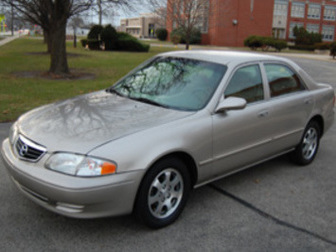
Here is a car repair that brought me back to basics. A customer with a Mazda 626 and a four-cylinder engine had a very rough engine idle. However, the complaint from the driver was a lack of power. They didn’t seem concerned with the engine idling problem. Nevertheless, the two issues were linked together, because the engine was running on three cylinders.
Rough Idle Diagnosis
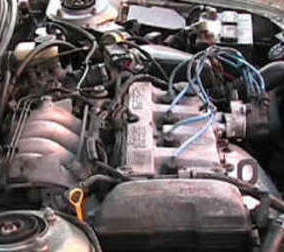
My diagnostic journey began with a visual inspection revealing this Mazda 626 had actually been well cared for. Since there is an endless list of possible causes for these types of car problems I decided to break out my old fashioned vacuum gauge and run a simple engine vacuum test.
I connected the gauge to manifold vacuum. The needle constantly droped from a normal reading to less than 10 inches of mercury. This type of reading is a strong indication of a serious engine problem. The Rhythm of the dropping needle matched the rhythm of the misfire. I decided to use a cylinder balance test to isolate the problem cylinder.
When I shorted out cylinders one through three there i recorded a slight drop in RPMs of about 125. When I did the same to cylinder number four there was absolutely no decrease in the idling RPM. Since cylinder number four is now the focus of my diagnostics I decided to pull the spark plug out and see what it looked like.
To my surprise it looked normal or at least like the other ones. So next I decided to do a quick engine compression test on the number four cylinder. Again to my surprise, this cylinder held compression as good as the other cylinders.
Engine Diagnostic Tests Results
This Mazda 626 turned out to be a tough diagnostic lesson for me. Usually the above tests mentioned would uncover the problem. They did, but I didn’t realize it yet. Not one to give up, I continued on.
I performed a cylinder leakage test, and this was kind of overlapping with the compression test. So I was not surprised the cylinder held air pressure. After some thought about the test results I realized the cause of the rough engine idle was because something wasn’t happening on cylinder four.
The Spark plug I pulled out was a clue, because it was dry. I removed the valve cover and found out what wasn’t happening. The intake valve on cylinder number four wasn’t opening. An inspection of the vehicle’s camshaft yielded that the intake lobe on the camshaft for the number four cylinder is completely wiped out. Worn down like a pencil eraser.
The lobe only effects the opening of the valve and doesn’t prevent it from sealing, which is why the compression and the cylinder leakage engine diagnostic tests appeared to be normal.
In order to fix this rough idle, replacement of the camshaft and lifters would be required. In the end the owner of the car decided to trade it against another used Mazda.To put things in prospective it’s not often you’ll find a worn cam shaft as the cause of your issue. Things like EGR problems are far more common.
I’m hoping you found this page helpful for your own engine diagnosis problems and will share it with friends. You can see how knowledge of the most basic systems is sometimes important to interpret the data revealed by each individual engine diagnostic test.
If you need answers to your engine running rough problems this next page takes you to the Homepage for YouFixCars.com. There you can learn how to get some one on one help.