

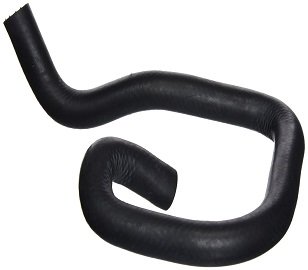
Radiator hoses don’t need changing as often as they did in the past. We credit extended life coolants and higher quality rubber construction for this miracle.
However, they still need inspection on a regular basis to prevent surprises while driving. This page discusses what you should look for and exactly how to visually inspect the rubber and plastic hoses on your automobile.
Also included is a helpful video that lets you see the actual inspection procedure. If you perform your own oil changes, this provides a good opportunity to inspect all engine compartment hoses.
This includes any that carry engine coolant such as an upper or lower radiator hose as well as the heater lines. And don’t forget the often buried water pump bypass.
Hoses that carry coolant are not only important, but also capable of ruining your day if one should blow while you’re out on the road. The video below explains how to check these as well as some fantastic tips on how to replace them.
Finding Repair Procedures for Radiator Hoses
One first inspection replacement of radiator hoses may look straight forward. Then you start digging in and you realize parts will need removal to gain access to the clamps installed on the automotive assembly line.
Factory issued repair manuals provide pin point information on exactly what needs to come off to complete the repairs. If you start guessing you’ll waste time and maybe money fighting with things that you shouldn’t disturb. Long story short, get a repair manual and save yourself the heartache.
Below the video I provide a few more of my own tips that were not included, as well as special tools for hard to reach factory spring clamps and other essential tools.
The engine hose video takes you one step further and shows you some other rubber hoses that should be inspected during regular maintenance. Example: Engine compartment hoses such as fuel lines and vacuum lines. A leaking vacuum line may not ruin your day but it can decrease your average fuel economy by causing an imbalance in the air fuel mixture.
Engine Compartment Service Advice
When you’re replacing your original equipment hoses as demonstrated in the above video they mention replacing the original clamps. I completely agree with this and always replace the spring clamps with new screw type hose clamps.
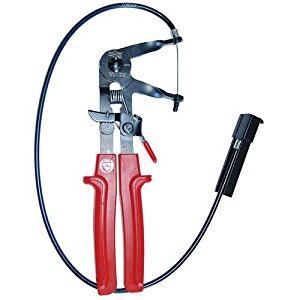
Also note that some factory spring clamps are very hard to get to. Over on the right is a special tool from Mayhew that I own and never fails. The remote cable operation allows you to fish the jaws down into tight areas and compress the spring, thereby releasing the clamp.
It’s also very important to replace the coolant with the exact same type installed from the factory. There are different types on the market and it’s not recommended to mix these different kinds of engine coolant. Additional details like fluid capacity and service life is available in the owner’s manual.
A downloadable PDF manual can provide step by step instructions for the repairs as well as fluid capacity and types of antifreeze to install. In the video they showed you that sometimes radiator hoses can be stubborn to release.
In the video they showed you using a screwdriver and razor blade. These will definitely work, but I do recommend you wear a pair of heavy duty safety gloves, when using this method to remove the old car parts.
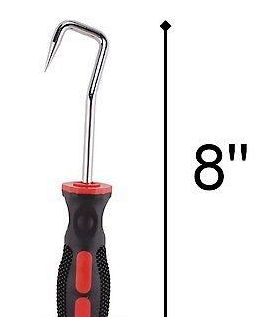
They do make a special tool that works excellent for loosening the stuck parts. This device includes a screwdriver handle and a 90degree hook at the end. You easily insert it into the hose, and then you move it around the circumference to completely break loose the old part from its fitting.
I recommend that you take a look at my hand tool safety page to brush up on safety tips. It might stop a trip to the emergency room for stitches.
People find the auto repair video section of the you fix cars website a great place to learn about car repair. I’m continuing to add videos on a regular basis. This next link takes you from radiator hoses to car repair videos.
If you would like to find out what else is available on this automobile repair website try the homepage. It provides a quick run down of what else we covered. You can also learn more about the car mechanic that built this website and supplies car repair help.