

Why Perform Oil Pressure Testing
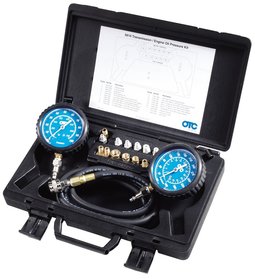
On this page we will discuss how to perform oil pressure testing and what can cause lower than expected results. But first lets talk about why we should bother with testing it at all.
Engine oil pressure is a strong indication of your motors overall internal health. Just like they use blood pressure to determine the health of the human body.
The oil pressure is a quick test used to determine the wear of an engine’s internal parts. The testing procedure is performed with mechanical gauges. Factory gauges might not be accurate or tell the whole story. Measuring pressure as it circulates through the engine in real time will tell you a few things.
Why is low pressure bad? Basically the pressure of the oil depends on the efficiency of the oil pump along with the size of the clearances through which the oil will flow.
Excessive clearance is most often caused by worn bearings and will cause a decrease in oil pressure. Some common worn bearings would include the crankshaft main bearings or the connecting rod bearings. In some cases and on a few models I’ve seen worn camshaft bearings cause low readings.
Reasons to Test Oil Pressures
A loss of engine performance, flickering pressure warning light on the dash, excessive engine noise, and even poor starting can all be caused by abnormal oil pressure.
When the engines oil pressure is too low, premature wear of its internally lubricated parts can be one of the results. Any of the above listed problems mentioned will cause me to break out my mechanical gauges and get a reliable reading.
Personally I do not trust the oil pressure gauge on the dash. This is because there is a lot of room for error between the electronic sending unit and the gauge itself. I will say however, that the newer the car the more reliable the electronic readings seem to be. If you have an 84 Pontiac Fiero I would hook up a mechanical pressure tester.
Pressure Testing Procedures
The easiest way in my opinion, to be sure you’ll get an accurate mechanical reading from the tester is to remove the factory installed sensor.
If a vehicle has an idiot light or gauge it will have an oil pressure sending unit somewhere on the block or casting area. You’ll also want to make sure you follow the instructions provided with the fluid pressure tester.
The tester I own, on the left, does both transmission and engine oil. Take my advice and use Teflon tape or thread compound on the connection fittings even though the connection is temporary.
Remember if you don’t have a good connection you may have a large mess to clean up. You should also look up the specifications for your engines pressure in a car repair manual.
Also note that the pressure is read when the engine is at normal operating temperature and results are recorded at idle speed, and usually around 2000 RPMs. Excessive bearing clearances aren’t the only causes of low results.
Sometimes they can be pump related problems. An example would be a restricted pump pickup screen. This can be commonly blocked by sludge from lack of maintenance.
Also note that a week or broken pressure relief valve, low oil level, contaminated oil, or even a low viscosity oil (wrong weight) can all cause low-pressure readings.
On this page we discussed the how and why of testing internal engine wear. I have a lot more information about other tests you can use to check the health and well being of your engine.
Learn the theory and operation as well as advanced testing procedures on my page that provides details about automotive engine repair and testing.
This next link will take you to the home page where you can find more information about the auto mechanic that built it as well as what else is covered on this automobile website. This next link takes you from oil pressure testing to automobile repair advice.