

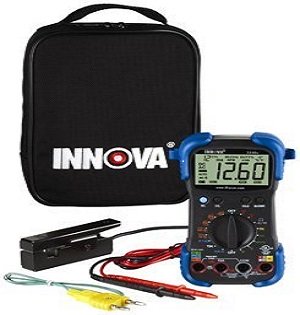
A multimeter is hands down, the most useful tool for automotive electrical diagnosis. They call this diagnostic tool a must-have for all mechanics. This is true for both professional car technicians and do-it-yourself driveway mechanics.
Meters designed for automotive testing are capable of performing many standard and advanced auto repair troubleshooting procedures. I have a guide on how to use a digital meter that removes the confusion from all of the selectable settings.
Knowing what scale to use is important and easy to understand when explained properly. Why not take the guessing out of diagnosis and only replace failed components.
Test electrical parts before replacing them. Relays, switches, circuit breakers, fuses, resistors and coils can all fail. Learn how to test them properly and discover a reliable way to do it consistently.
On this page you will learn a few tips about how to use a multimeter. You’ll also see 2 reviews of automotive meters I own. The Innova 3340 pictured above and available somewhere on this page, I use at home. It works well and is affordable.
I have the Fluke 87v pictured on the left that I use at work. You can’t go wrong with either one, but they are very different. A quick review of the fluke 87. In my opinion this is more then a automotive meter.
It’s an auto repair troubleshooter in a box. You can of course do all the things mentioned on this page and many more. One of my favorite features is the inductive rpm hook up accessory.
This does not come with the stand alone meter. It can be purchased separately or it comes with the 87VA series deluxe kit. This thing is great for cylinder balance tests. Some manuals that come with the cheaper testers are pretty weak.
The fluke manual is almost like a textbook. It covers everything the car troubleshooting tool can do. As a side benefit if you happened to read every word, I bet you could not only pass the ASE automobile electrical test, but also fix the most complicated car electrical problems.
What Can a Multimeter Do
The three most important things, this automotive meter can do is to measure amps, volts, and resistance. On this page, I will review the basic theory behind these three very important electrical measurements and how to hook it up.
The Ammeter will measure the flow of current through a conductor like a water meter is used to measure the amount of water flowing through a pipe. When the ammeter is connected for testing the circuit has to be broken and the meter inserted into the break so that all of the flow is measured through the multi-meter.
This placement of the ammeter is known as in series with the circuit being tested. This is simply, the tool is used to complete the circuit.
Since all the electrons in the electrical circuit must pass through the ammeter it will indicate the number of amps per second passing through it.
As in the case of a flow meter which must be connected so that the water flows through it, in the proper direction, so must the ammeter be connected in the right direction.
This will require you to connect the positive terminal to the positive side of the circuit and the negative terminal to the negative side of the circuit. Hooking it up backwards doesn’t harm the meter, but will provide readings in the negative range.
Voltage is Electromotive Force
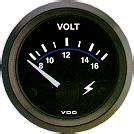
The voltmeter is used to measure the electrical pressure or the voltage drop of a resistance. Using it in a circuit is similar to measuring water pressure in a pipeline not the flow.
The water pressure gauge senses water pressure and registers accordingly. A voltmeter is not inserted into a circuit like the ammeter but rather parallels an existing circuit. Just like a tire pressure gauge checks tire inflation.
The difference between ammeter and voltmeter hookups is also the difference in a series and parallel circuit. Meters are useful for automotive diagnosis in the same way a test light is used for quick checks.
The difference between the voltmeter and the test light is the multimeter provides the flexibility of measuring different voltages as well as being able to calculate voltage drops across components and circuits.
Resistance is Not Futile
The ohmmeter is an instrument designed to indicate resistance directly in ohms. Connecting a low-voltage and a variable resistor in series obtains this measurement with the meter and its leads.
When the probes are connected together the circuit is completed and a zero resistance reading is indicated. When the leads are held a part the ohmmeter will read a maximum or infinite resistance.
Sometimes this measurement is indicated as OL or out of limits. This reading indicates the resistance between the probes is so high that no current will flow through the circuit.
The ohmmeters most common usage would be for measuring resistance of components and also the integrity of electrical circuit’s. Another way I use ohmmeters is for checking ignition coils. In your car repair manual, you can look up specifications for the resistance of the ignition coil.
You can then test the actual resistance of the coil and compare it to the specifications. Always visually inspect the plastic coil cases for hairline cracks, because they can pass the resistance test and still be intermittently defective.
This was just a brief overview of the three main functions of a multimeter. Even the most basic units like the Innova 3320 come with decent instructions on how to use the different functions of the tool.
I think one of the best ways to become skilled at automotive troubleshooting is to buy one of these units and become familiar with its operation. Practice by testing different kinds of components and systems on your own automobile.
You can also pull relays, coils and switches from junk yard cars and test the components to see how it works. Then have some fun with it and fry these old car parts or create opens to compare results.
After you use it a couple of times you will see why this can be a mechanic’s best friend and it might stop you from replacing non returnable electrical components that do not need to be replaced in the first place. Give this automotive meters and testing page a bookmark or share.
This next page is the start page for my automotive electrical section. Use the information to get a basic understanding of automotive electrical theory. This next link will take you there from this page about the Multimeter | Automotive electrical meter.
Find out what else is available on the you fix cars website. You can also learn more about the car mechanic that thinks some people can do their own Diy auto repairs.