

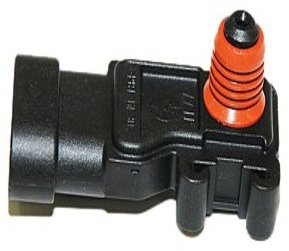
Map sensor problems are more common on certain models. As far as engine computer sensor reliability, this is one of the sensors that appear to be more reliable overall.
But on a few models, poor mounting location chosen by the factory may reduce its reliability.
For example, on the Chevrolet diesel engine that’s found in many 3500 series pickup trucks and work vans, the map sensor is mounted directly to the intake.
The engine sensor pictured to the right is from a 6.5 liter Chevrolet diesel. The orange ring is what actually seals the vacuum input signal port to the hole in the plastic intake manifold.
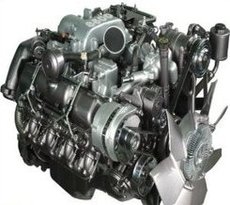
In the case of a 3500 series work van the engine has a tendency to build up more heat. This is because of an insulated engine cover that is common on most vans.
The heavy insulation keeps heat and noise out of the passenger compartment but concentrates it around the engine. As we learned in school, stuff rolls down hill and heat rises, it’s simple physics.
With the map sensor being made out of plastic and mounted directly on top of the manifold that generates a lot of heat it’s not uncommon to find a problem with the map sensor and plastic electrical connector on this configuration.
On many older General Motors cars and trucks this part is mounted on a bracket and a vacuum line provides the input signal. On the Chevrolet turbo diesel engine it is sometimes called a boost sensor and fits into a small hole directly drilled into the intake manifold.
Information about Pressure Sensors
The word MAP stands for (manifold absolute pressure). This engine sensor measures changes in the intake manifold pressure that results from changes in engine load and speed.
Not to get all scientific about it, but it measures the difference between barometric pressure and the actual manifold pressure. An example of this pressure differential is a wide open throttle condition.
This will produce a high value because the pressure in the manifold is approaching the same pressure as outside (Barometric). This is sometimes known as inverse measurements, because it is opposite of what you would see on a vacuum gauge.
The advantage of comparing the manifold pressure with barometric pressure is this will allow the engine to properly meter air fuel mixture regardless of the operating altitude. Example, cars running in Colorado would require a different air fuel mixture than one operating below sea level in New Orleans.
Diagnosing Engine Senor Problems
The two most important inputs to this engine sensor is the electrical connection and vacuum hose connections.
I’ve seen damaged and or melted electrical connections set codes. Although wiring problems are less common they can still set a code for sensor voltage low or high.
These codes can fool you into believing the sensor itself is defective. I have also seen disconnected and or damaged vacuum lines that can cause problems as well.
The older the automobile the more likely problems will be in these areas. Both of these common problems can be detected with a good visual inspection. In addition, a broken vacuum hose makes noise so you can track it down by ear as well.
The MAP sensor allows for automatic compensation and proper air fuel mixture regardless of altitude. This also relies on the outside air temperature that can change the airs density that is entering the engine.
The information supplied to the computer from the air temperature sensor helps it perform adjustments on the fly. It is very rare, but with some MAP sensor problems the air temperature sensor can cause the issue.
This is one of the reasons that I recommend vehicle specific reference materials and to follow the steps outlined in the diagnostic tree chart for the set code.
It also helps if you select an online version that provides technical service bulletins that may identify any common problems associated with that particular vehicle such as the Chevrolet diesel engine mentioned above.
Give this Diy car repair page a share or bookmark.
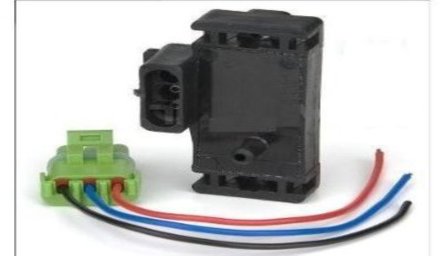
For convenience here are some popular replacement MAP sensor kits.
I put together a pretty good resource page discussing other common problems that can turn on check engine lights. This next link takes you to more information about automotive computer sensors.
The you fix cars homepage is a good place to review what other kinds of information is available here for Diy car mechanics. You can also find out how to get your car repair questions answered.