

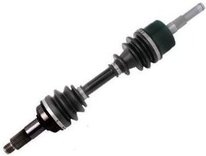
The CV joints can have a long life. To make sure a constant velocity joint has the longest service possible periodic inspection is recommended. Despite how well you take care of your drive shafts and joints, problems can still arise. On high mileage vehicles replacement or diagnosis of CV joint problems may be necessary.
These flexible drive shafts endure extreme heat and cold and suffer through the shock of potholes at high speeds. The parts sometimes called half shafts carry high torque loads around turns for thousands of miles. The information on this page covers care of the components that drive the wheels as well as some tips for diagnosis, inspection and a video at the bottom showing how to remove parts.
Replacement Service Parts for CV Joint
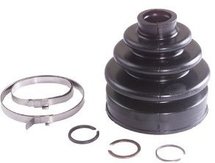
The constant velocity joint is encased in a protective rubber usually made of silicone but can sometimes be a hard plastic boot as well. It most often has accordion style folds to allow for generous amounts of movement and flex without rupturing.
I would say out of all the components on the flexible drive shafts I personally consider the CV boots the most important. The CV boot is designed to retain the grease and keep the joint fully packed and lubricated. This part also keeps dirt and water out. When these half shafts are manufactured and the boot is installed and sealed no further lubrication is required for the life of the joint.
The CV boot is usually clamped on either side and periodic inspection of these clamps is important to the long-life expected from the joint. Crimp style clamps require a special tool that sets the tension on it.
A loose crimp style clamp should only be tightened by the special tool mention above. Although I have seen loose clamps a small tear or puncture in the boot itself is more common. This can not only allow grease to leak out but allow dirt and water to enter the joint.
Dirt and water reduces the lubrication properties of the remaining grease in the CV joint. After the boot is compromised the parts inside can be destroyed quickly. Outboard joints tend to be exposed to more problems than inboard ones. Road debris can jump up and damaged the boots. This is why periodic inspection is recommended.
CV Joint Diagnosis and Inspection
Most often when these flexible drive shafts develop problems the driver will describe the noise that is generated as a clicking or popping sound that gets worse when steering. A road test is probably one of the best ways to diagnose a problem with the constant velocity joint.
A smooth road surface such as a parking lot makes a good testing area. From a dead stop and having the wheels turned slightly to the left or right and then applying medium power can often re-create the noise that would come from a worn tripod or CV joint.
A visual inspection of the half shafts can also reveal problems. As mentioned above boots with small holes or tears or even loose clamps will sling grease on the surrounding areas. In most cases it is too late to save the joint depending on how long it was driven on.
The clicking and popping is often the most common noise from a flexible drive shaft assembly. Other noises can also be generated by severely worn parts.
When excessive clearance is developed from lack of lubrication clunking is often heard when applying power and in stop and go situations. A humming or growling noises is also sometimes heard from a constant velocity or a tripod joint. In this case diagnosis can be a little more difficult because other parts of the vehicle can create the same types of noises.
More information about manual drive train parts such as manual transmissions and drive shafts can be found on this next page. There are also a few more articles about CV joints.
Give this CV axles page a bookmark or share with people.
The YouFixCars.com Homepage is a good place to start to find out what else is covered here. Also learn more about asking DIY auto repair questions.