

Clutch Problem Diagnosis and Repair
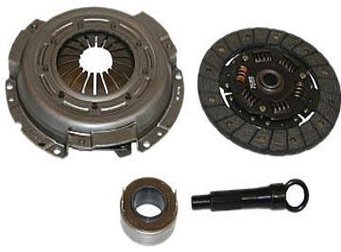
Clutch problem diagnosis and repairs may be required whether you have a hydraulic or a manually operated system. Clutches are made of friction material designed to wear away similar to the way brake pads wear.
The longevity of the clutch disc itself actually relies on the skill of the drivers operating the vehicle. A driver that hovers their foot on the clutch pedal allowing the disc to slip against the flywheel will find their clutch disc needs to be replaced more often.
Replacing the friction disc is not the only type of maintenance that’s required when it comes to manual transmissions. Vehicles with external linkage will require periodic lubrication of these components. Failure to perform lubricating operations can also reduce the life of the disc and cause other clutch problems.
The clutch slipping condition is probably the most common issue complained about from drivers with manual transmissions. Slippage is a condition in which the engine overpowers the friction coupling attaching it to the transmission and in turn the drive wheels.
Clutch slipping will often happen during initial acceleration or when applying large amounts of power in passing situations. Also while in higher gears and climbing steep grades is common. There are several ways of checking for a slipping clutch.
Many vehicles with a manual transmission will have a tachometer or RPM indicator. When driving the vehicle you can select a higher gear and apply some heavy acceleration and watch your rpm’s compared to vehicle speed. If the RPMs swing up high and the speed does not increase or increases slowly this is a sign of a slipping clutch problem. When you have proper clutch operation RPMs and speed increases smoothly at the same rate.
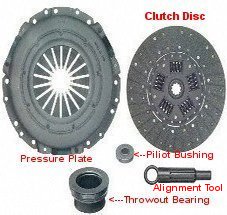
The other way to test for a slipping clutch problem is to perform a stall test. This is best performed by an experienced mechanic that has done this before. When performing a stall test safety should be a concern.
They apply the parking brake and block all four wheels to prevent the vehicle from surging forward. In a stall test the clutch should be able to be released and stall the engine.
Also remember the problem of flywheel slip can be caused by other vehicle related issues. An example would be a rear main seal oil leak dripping on the clutch disc itself. An oil soaked clutch will slip and exhibit the same symptoms as a worn friction disc. This happened on my 300zx and I wrote an article about the other clutch problem the Z had.
Clutch Dragging and Binding
Although dragging and binding is not as common as the slipping condition mentioned above, I have seen it enough to briefly discuss it. This condition can also cause some expensive internal transmission damage if ignored long enough.
If the clutch disc is not completely released when the clutch pedal is fully depressed this would be considered a dragging or binding clutch. I will explain how to test for this condition. But first lets talk about the symptoms of this issue before we test for it. Clutch drag can cause shifting complaints as well as gear clash.
The reason is the main shaft on the manual transmission will continue to spin. When the clutch pedal is pushed to the floor the it should fully release and allow the input shaft to stop turning within 2 seconds. If it continues to turn shifting can become difficult. This is especially true for reverse, because this gear is usually not synchronized.
The YouFixCars.com Homepage gives you some background information on what is available on the website.