

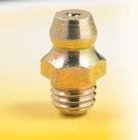
Chassis lubrication is something that should be done during an oil change, maintenance service or safety inspection. Important: not all vehicles have grease fittings. In fact, as time moves forward the grease fitting is becoming a thing of the past.
Sealed non-serviceable joints and front-end parts are now more common then ever before. But what if you have an older vehicle or even a newer one that still has chassis lubrication fittings.
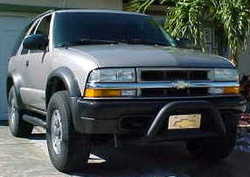
It is really important to lubricate them without damaging the sealing boots. My 2004 Chevrolet Blazer has about 10 fittings. Which leads me to a personal story with a unhappy ending.
When I first moved to Florida I didn’t have a place to perform my own oil changes. I wasn’t permitted to bring my truck into the shop at work to perform maintenance, because it’s a local government facility.
Since it’s funded by tax payers you can only work on public works vehicles there. To further complicate things it was against the apartment complex rules to perform any do-it-yourself auto repairs in the parking lot. Rules are strictly enforced with penalties of $200 for the first offense.
So with no choice, but to surrender to my current situation, for the first time in about 25 years, I brought my truck to a Chevy dealer for a lube oil and filter service. I got the $24.95 super special.
The service was supposed to include checking tire pressure, filling all fluids and a complete front end lubrication. My truck had about 3,000 miles on it and the suspension had never been lubed before.
They did the service in about 30 minutes, but they failed to perform any of the above items. I checked the truck after the service and the washer fluid was empty. The tire pressure was low and they never lubricated the chassis.
I went to the service manager and told him that this stuff wasn’t done. After insulting me for about 10 minutes he finally took a look at the truck. He agreed the service hadn’t lived up to the advertised description.
Problems from Chassis Lubrication
He had the technician bring the truck back in and lubricate the front end. When I checked it the second time, all of the boots were broken.
The angry mechanic used a high-pressure grease gun connected to shop air to fill the joints until the boots broke. When this happens, the grease leaks out and the joint can wear prematurely.
Now you have to increase your inspection and lubrication regiment. After bringing this to the service manager’s attention he called the police and I was removed from the dealership by force. The local Police didn’t understand why I was so upset by the intentional mistreatment of my almost brand new vehicle.
So now that my truck is five years older I am starting to see the fallout from my visit to this local Chevrolet dealership. It’s so hard to find people that will care about your car as much as you do.
When you find them hold on for dear life. So at this point the rubber boots that protect the upper and lower ball joints and the inner and outer tie rod ends are almost completely disintegrated.
Once they are compromised they rot away faster. Chassis lubricant is slung all over my front end and I get to see this on every oil change. I’m now doing scheduled maintenance in my own driveway at my new old home.
It’s heartbreaking when you spend $25 to have someone abuse your vehicle and reduce the life span of your front suspension parts. This is why I recommend learning how to do-it-yourself.
How to Lubricate a Front End
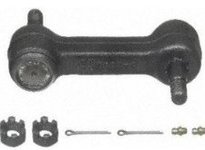
Grease fittings have a one-way spring-loaded check valve that allows grease to check in, but not get out. It is important to locate all lubrication points on your automobile.
Then start by wiping each one clean with a rag. This will prevent grains of sand or dirt to enter the grease fitting and hold open the check valve that will allow the grease to leak out.
Carefully look at the joints and the boots that seal them. Common suspension parts that have grease fittings would be ball joints, tie rod ends, idler arms, and center links.
Some fittings are hard to get at. I have added a right angle grease coupler at the bottom that can make chassis lubrication easier. On some vehicles, especially on light and heavy duty trucks, control arms and pitman arms also have grease-able zerk fittings.
The tip of the chassis lubrication fitting has a ball and groove setup that allows your grease gun to positively engage and seal to the fitting. Meaning the tip of the grease gun will stay latched on so you can use two hands on the pump handle.
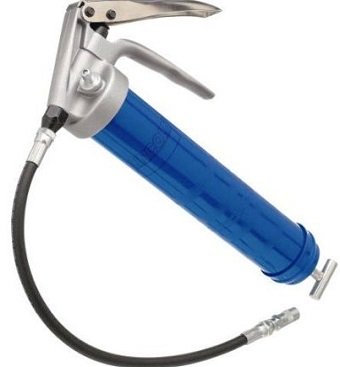
If you get the Lincoln heavy duty pistol grip grease gun above, it makes the process a little easier. This type has leveraged one handed operation so the free hand can hold the whip hose steady.
However, both types will still require some force. In other words you may have to push pretty hard to get the grease in the fitting.
When lubricating a chassis it’s important to put just enough grease into the joint to cause the boot to expand slightly. Once you see this movement you know the suspension or steering joint is full.
At this point you do not want to add more lubricant. You have gone too far when grease begins to leak out of the joint boots. It’s not the end of the world, but you may have increased wear of the chassis part and possibly a shorter lifespan of that suspension component.
If the boots are broken like on my 2004 Chevrolet Blazer. What you want to do is add enough grease until you see the old grease leaving the joint through the ripped boots.
This will happen quickly and require little force on the grease gun handle. When you’re suspension boots are broken, they may require more lubrication if the original lifespan of the parts is going to be maintained. Add more after trips through deep puddles or off-road adventures. Give this how to lubricate front end parts resource page a bookmark.
The YouFixCars.com Homepage is a good place to obtain more automotive information and tips from online mechanics.
One of the most visited sections of this car repair website is related to this front end chassis lubrication subject. Learn more about the stuff that holds your car up on my page about car suspensions.