


There is a lot of different automotive wiring in today’s automobiles. This is despite the talk of changing over to fiber-optic networks. Even in General Motors latest multiplex systems they have chosen to go with electrical wire Instead of fiber optics.
It appears that this future technology is still five to 10 years down the road. So let’s discuss different types of wires. If you are looking for automotive wiring diagrams, you can go to my car repair manuals page for more information on where to find them. I also have a video on how to use them to fix common car electrical problems.
Electrical wires are used to conduct electricity to operate the electrical and electronic devices in vehicles. There are two basic types of wires used.
The solid strand wire or single-strand conductor like you would see in houses. In the automobile we see stranded wires that are made up of a number of small solid wires twisted together to form single conductors.
The car-makers are seeking to replace these harnesses with fiber optic cable or multiplex systems where less wire is used. They accomplish this by allowing different systems to share the wires running through out.
Future talk aside stranded wires are still most commonly used in moving applications like cars and boats. Electronics such as computers use specially shielded twisted cable for protection from unwanted induced magnetic field voltages that can interfere with computer functions.
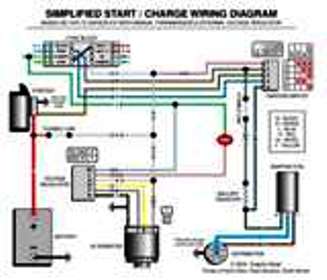
Its length and its thickness or gauge size determine the current carrying capacity and the amount of voltage drop in an electrical wire. Standardized wiring sizes were established by the Society of automotive engineers.
AWG stands for American wire gauge. A numbering system ranging from zero to 20 with zero being the largest and the number 20 being the smallest thickness of wire identify sizes.
Most automotive wiring ranges from No 10 to No 18 gauge. Battery cables on the other hand would be about a standard 4 gauge wire. This is due to the battery cables main function of carrying the high currents for the starter motor and charging system.
Auto electric wiring can also be classified as primary or secondary. The primary wiring carries low voltage to all of the electrical systems of the vehicle.
The secondary wiring also called high-tension cable has extra thick insulation to carry high voltage from the ignition coil to the spark plugs. This insulation reduces the magnetic flux field created from the high voltage.
When spark plug wires wear down the magnetic fields can effect other areas of the car. Sometimes the first system to be affected is the audio system. Ignition interference can often be heard through the speakers.
Standard Electrical Wires
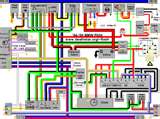
With all of this wiring running through the vehicle a way of organizing was necessary. Harness and it’s connectors help divide the vehicles electrical system and provide a convenient starting point for tracking and testing many circuits.
Many harness connectors are located in the dash or firewall area. As the number of electrical and electronic devices installed in today’s vehicle increases so does the need for more wiring to support the devices.
More wiring leads to more weight and also more potential that problems will develop as the vehicle ages. This is why the near future of the automobile will placed in new technologies such as multiplex systems that share the wires to communicate with separate systems.
This is already being used in limited fashion as this type of manufacturing is in it’s infancy. The car builders would like to get rid of wires all together as copper costs rise. Glass filament is exciting because we have plenty of sand around.
When fiber optic cables and networks are perfected this will reduce the vehicles weight along with the expensive copper wire. But until then we will have to learn how to use wiring diagrams along with standard electrical diagnosis. Give this electrical wire resource page a bookmark or share with friends
Now that we have discussed wiring and the different sizes you can head on back to the main page for automotive electrical information. This next link takes you from automotive wiring to the auto electrical education page.
The home page is available from this next link. It will tell you in more detail, what is available on this website, and more about the mechanic that built the. You can also find out why he believes. You can fix your own car with some Diy auto repair help. The most popular section of the you fix cars website is coming up on this next link. View some short but helpful automobile repair videos.