

Automotive Electrical Magnetism
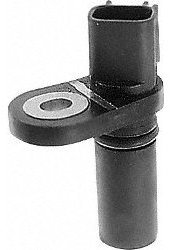
Automotive electrical magnetism is used in components such as alternators, ignition coils, starter solenoids, and pulse generators. Modern automobiles will not start without the information supplied from a magnetic crank shaft sensor.
When reading this article remember that Electricity and magnetism are related. One can be used to create the other. Current flowing through wire creates a magnetic field around that wire.
Moving a wire through a magnetic field creates current flow in that wire in small amounts. A substance is said to be a magnetic, if it has a property of magnetism. This is the ability to attract items such as sheet metal, iron, steel, nickel, titanium, or even cobalt. These are all metallic magnetic materials.
Automotive Magnets Flux Fields
A magnet has two points of maximum attraction. These points or called poles. With one being designated the North Pole and the other the South. If two magnets are brought together at opposite poles they will have a strong attraction.
If similar poles are pushed towards each other they will repulse or have a strong physical resistance. A magnetic field called a flux field exists around every magnet even though you can’t see it. This magnetic field consists of flux lines, along which the magnetic force acts. These lines emerge from the North Pole and enter the South Pole.
Then they return to the North Pole through the magnet itself. All lines of force leave the magnet at right angles to the magnet. And none of these lines cross each other. Inserting a bar of magnetic material inside a coil of insulated wire and passing direct current through the coiled wire can make artificial magnets.
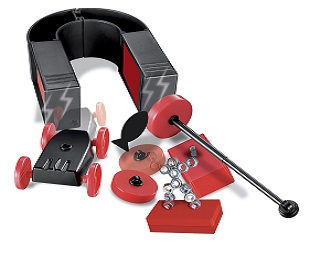
This principle is very important in modern day automobiles. Learning these theories will also aid in understanding certain automotive wiring diagrams. Magnetism can be used to open and close circuits.
The magnetic field represented in wiring schematic as a dotted line is used extensively throughout many of the automotive systems. An example of a common use of magnetism in car related circuitry would be the automotive relay. Basically, an automobile relay is an electronically controlled on off switch. The contacts of the switch are pulled together by a magnetic field.
Yes, as mentioned above energizing a coil of wire to create the magnetic field on demand controls this magnetic field. On a four-wire relay, you will have a power and a ground on one side of the relay.
This is the side that gets energized by the control circuit. The other two wires on the relay will be used to create a completed circuit. In the case of a four-wire relay the component can be easily jumped to diagnose its operation.
This way you don’t have to replace relays unless they have tested bad. The auto relay along with the magnet crank sensor are both non-returnable electronic car parts. These are also often replaced in error. Remember to test components before replacing them.
Give this automotive electrical magnetism page a share or bookmark.
If your interested in electrical diagnosis for automobiles then this next page should help out. See what else is available for consumption besides automotive electrical magnetism.The driveway mechanic is making a comeback. Find out what else is available on this car website on The YouFixCars.com Homepage.