


Automotive circuit protection is necessary on all automobiles to prevent electrical fires. When overloads or short circuits cause too much current to flow through the circuit, the wiring will heat up and the insulation will melt.
This could result in a fire unless the circuit has some kind of protective device to disconnect the power. Automotive fuses, fusible links, Maxi fuses, and circuit breakers are all designed to provide this protection from overload. They can be used singly or in combination with each other. I’ve added one of my most popular videos on how to find electrical shorts on cars below.
Fuses Automatically Disconnect the Power
The most common automotive circuit protection device is the standard fuse. There are three basic types of standard fuses for automobile applications. The cartridge fuse is found on older domestic vehicles and also in a few imports.
This fuse is composed of a strip of low temperature melting metal, enclosed in a transparent glass or plastic tube. The ceramic fuse is used on many European imports. The core is a ceramic insulator with a conductive metal strip running along one side.
Late-model domestic vehicles and now many imports use a blade or spade type fuse. In this case a strip of low temperature melting metal connects the two blades together and will melt away, causing an open circuit if too much current is drawn through it.
Automotive Circuit Breakers
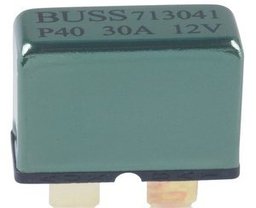
You’ll find that electrical breakers protect many automotive circuits. These devices can be fuse panel mounted or in line. Just like fuses a circuit breaker conducts current through an arm made of two types of metal bound together.
This is known as a bimetallic contact. If the arm starts to carry too much current it heats up. As one metal expands faster than the other, the arm bends and opens the contact.
The current flow is broken at this point. A circuit breaker can be a cycling type or it can be a manual reset kind of electrical flow interrupter. In a cycling type circuit breaker the bimetallic arm starts to cool and once it gets to a certain temperature it will close the contacts and again allow voltage to flow.
If the current is still too high the circuit breaker will reopen this circuit. A manual reset circuit breaker will usually have a button or a lever to reset the circuit manually. Again if the current is too high this breaker will be triggered and have to be reset again.
Many late-model vehicles use a new design fuse called a Maxi fuse. Maxi fuses look and operate like two prong blade or Spade fuses except they are larger and can handle more current flow.
Modern Automotive Circuit Protection
Typically the physical size of a Maxi fuse is about five times larger than your standard blade fuse. In most cases you will find Maxi fuses are located in an under hood fuse block assembly.
The main purpose of the Maxi fuse is to allow the vehicle’s electrical system to be broken down into smaller circuits that are easily diagnosed and repaired. For example in some vehicles a single fusible link controls one half or more of all circuitry.
If it burns out many electrical systems are lost. By replacing the single fusable link with several Maxi fuses the number of systems lost due to a major problem in one circuit is drastically reduced. This makes it easier to pinpoint the source of the malfunction.
Now that we understand the different types of automotive circuit protection we will never look at a blown fuse the same way again. Learn more about car electrical systems from my education page about automotive electrical .
The homepage is a fantastic place to find out what else is available on the you fix cars website. This next link takes you from automotive circuit protection to car repair advice.