

An auto air conditioning leak is probably the most common problem found when your car AC system isn’t blowing cold air. The temperature at the dash vents should be in the 45-55 degree range.
What can happen is the Freon will leak out and reduce the total pressure in the system. Then the low-pressure cut-off switch disengages the compressor. Most car makers turn off the compressor when the low side is detected below 25 PSI.
They include this safety feature to protect the component from harm. I’ve seen professional and driveway mechanics bypass the low cut-off switch for testing purposes. This diagnostic step is not recommended.
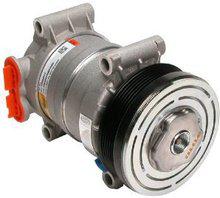
Damage to the compressor happens quickly when the freon is low, because the refrigerant contains a lubricant charge. When internal damage occurs it wreaks havoc by spreading tiny metal flakes throughout the entire air conditioning system.
For these reasons replacing the compressor is an expensive auto repair. Note that when the system pressure is low and the clutch disengages, it’s just like having the AC switch turned to the off position.
Therefore, leak testing is one of the most important tasks when it comes to troubleshooting a system. Keep in mind that over a long period of time all air conditioners will lose or leak out some refrigerant.
I went to a Delco AC training class and the instructor said, an automotive air conditioner could lose up to 2 ounces of Freon a year and this is considered normal.
Finding Automotive Freon Leaks
As I mentioned before in previous articles about how the air-conditioning system works, the Freon contains the lubricating oil charge necessary to protect the compressors internal moving parts.
However, we can also use this refrigerant oil to find leaks. The visual presence of oil around a fitting or pressurized line is a strong indication of a leak.
So my first step in diagnosis is to perform a careful visual inspection of the entire system. Although this is my first step, it’s not always effective in pinpointing the issue.
In fact, this visual inspection will only uncover large problems and having a small leak is more common. These slow leaks allow refrigerant to escape over long periods of time. Next we’ll highlight some methods for locating these hard to find issues.
Electronic Freon Leak Detectors Reviewed
My Robinair and TIF instruments leak detectors are the second tools I’ll use in my fight against air conditioning leaks. This is the preferred method of refrigerant detection, because it’s safe, effective and compatible with many types of Freon.
These detectors are a hand held battery operated electronic gas sniffer. The test probe on the end is moved about 1 inch per second in the areas of suspected leaks. Make sure there is a partial charge in the system and the tester tip is clean before beginning.
I usually go for the high pressure side fittings and O-rings first. The refrigerant gas is heavier than air. Therefore, I run the leak detector just below these fittings and lines. The Robin air leak detector has an alarm that goes off when it detects the presence of a refrigerant.
Note on some other models they may have flashing lights or a buzzer. Also some cheaper leak detectors only detect R134a. People make a few common mistakes when leak testing AC systems with these leak sniffers.
First, they get impatient and move the tip too quickly. Second, is failure to run the tester lead under the component connections and lines. Finally, the tip attracts dirt easily. You have to keep the tip clean or they won’t do their job right.
Are Fluorescent Dye Leak Detectors Better
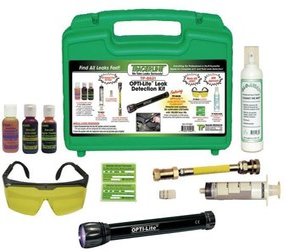
Most auto repair shops I’ve worked at, including the one I work at now, has a fluorescent dye tracer system for finding stubborn leaks.
To find refrigerant leaks using the fluorescent tracer system, you first have to install the fluorescent dye into the AC system.
Always follow the instructions and do not install too much dye. This is important, because too much can reduce the cooling efficiency of the system. Different refrigerant dye leak detectors will accomplish this in different ways.
The type we use at work has a device that looks like a caulking gun and a hose that connects to the low side fitting. Then you actually push the dye into the low side with the engine running and the compressor engaged.
Next you run the air-conditioning system for several minutes to distribute the dye evenly. Then you put on your yellow glasses and examine the system with a fluorescent light.
The fluorescent dye shows up easily wearing the yellow glasses. Sometimes the results will yield something you don’t want to find.
For example, the last time I used the fluorescent dye system I didn’t see any leaks in the engine compartment. However, when I examined the evaporator case inside the passenger cabin, the fluorescent dye formed a large puddle at the bottom of it.
This meant the evaporator itself needed replacement. This isn’t a fun job on most automobiles. On many models the dash has to come out completely to access it.
What about Air Conditioner Leak Sealer
A very popular selling item is refrigerant with leak sealer. This item will only seal very small leaks. I have used the stuff pictured to the right called “super seal pro” and it does work in isolated situations.
It works best when you have low pressure side system problems. If you happen to have a small leak from an O-ring on the low side, this stuff can work well.
However, if you have an issue on the high-pressure side chances are this sealer won’t work for you. If the leak is small enough and from an O-ring on the high side there is a 50-50 chance the stop leak will help.
Although, when I say help, I mean it might slow it down even further, but it will most likely continue to leak. An example of common results from using an air conditioner leak sealer is it still leaks, but may require less recharging.
If your lucky a charge installed in the spring will last till the end of the summer in the best-case scenarios. Nevertheless, with the cost of AC repairs quickly becoming one of the most expensive auto repairs of all, $50 a year to stay cool seems like it’s worth a try.
Just remember I mentioned it may not work at all and you’ll wind up having to diagnose your air conditioning leaks the old fashioned way. It’s quite possible that physical repairs or the replacement of AC components will be required.
If you decide to go ahead and replace ac parts it’s important to pull a vacuum on the system to remove any moisture after the repairs are complete. Moisture can cause many problems, but can also freeze up and create hard to diagnose blockages in the system. Give this automobile AC repair page a bookmark or share. Then come back to explore the additional information on this subject available below.
I’m a strong believer that it is easier to fix something when you understand how it works fully. And this is what the car AC section of this website is all about. This next link will take you to the automotive air-conditioning repair module. My best page about this subject provides information about protecting yourself from common rip-off car AC repairs.
If you need specific car repair instructions for replacing ac components on particular cars then take a look at my online car repair manuals section that includes a video demo. On the you fix cars home page you’ll find a brief rundown of what else is available on this auto repair website. You’ll also find more information about the mechanic that built it and why he thinks a lot of people can do their own Diy car repairs.