

Diesel engines represent a proven technology with a long history of success. The invention of this motor is accredited to Dr. Rudolf Diesel. The good Doctor was a brilliant German engineer that produced the first fully functional working model in 1897.
This is now the dominant power plant in heavy-duty trucks, farm equipment, buses, large marine applications and don’t forget about trains both freight and passenger. During the early 80’s many in the automobile industry predicted small versions of this motor would replace gasoline engines in passenger vehicles.
Stable gas prices and drawbacks like engine noise and smoke output of the efficient diesel engine hampered the growing enthusiasm that is needed for the automotive technology to develop in the retail market. With that said, Chevrolet is going to make another run at it with a revolutionary clean and quite turbo diesel in the Cruze model for 2015. Volkswagen always moved a few TDI powered models and those offerings continue for 2015 and 2016.
How Diesel Engines Work
Gas powered engines share several similarities with diesel engines. They share a number of components, such as the Pistons, crankshaft, camshaft, overhead valve train, as well as water and oil pumps.
Both of these engines are available in four stroke combustion cycle types. How can you tell them apart quickly? Well the diesel engines are easily recognized by the absence of an ignition system no cap, rotor, ignition wires or spark plugs.
That’s right no spark plugs. There are glow plugs that are used when the engine is cold and they are hard to mistake as spark plugs. After the engine is warmed up the glow plugs turn off and the cylinders are ignited by magic at exactly the right moment.
The motor uses the magic of heat produced by compressing air and fuel in the combustion chamber to ignite the fuel charge. Fuel injectors spray highly pressurized diesel into the cylinders just as the piston is completing its compression stroke. The timing of the fuel spray is critical.
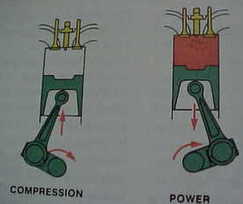
The heat of the compressed air ignites the fuel and the explosion drives the cylinder downward know as the power stroke. This could very well be the motivation behind Fords pet name for their Heavy Duty line of factory installed diesels.
This is why when the engine is cold glow plugs are needed to heat up the combustion chamber. In some climates like Alaska you need additional heating elements to get the engine started without prolonged cranking. The most common is the block heater. The standard block heater is an ingeniously designed small heating element that is installed in the engine water jacket.
This allows for steady even heating of all the coolant throughout the entire engine at the same time. Cold starting is impossible without block heaters and glow plugs because even a super high compression ratio cannot heat cold air enough to cause spontaneous combustion.
3 Different types of Diesel Combustion
Diesel combustion chambers are different from gasoline engines, because diesel fuel burns differently than gas. There are three types of combustion chambers that are used in modern diesel power plants.
There is the open combustion chamber, Pre combustion chamber, and turbulence combustion chamber. The open style has the combustion chamber located directly on top of the piston.
It looks like a small indentation or shallow cup. Diesel fuel is injected directly into the center of the chamber. The pre combustion chamber style is a smaller second chamber connected to the main combustion chamber.
On the power stroke, fuel is injected into the small chamber. Combustion is started there and then spreads to the main combustion chamber. This design allows lower fuel injection pressures. One of my favorite engines of all times is the 7.3 L Ford power stroke. We have three handy buses (F350 Econoline cut away) in our fleet that have this power plant installed. The engine belt is long and loops around 9 pulleys.
All three of these buses have more than 350,000 miles on the original engine. The buses themselves are 1996 Ford Econoline E-350 Vans with cutaway bodies.
Although these heavy duty trucks have not needed any internal work, each one has had to have a water pump and alternator about every hundred thousand miles or so. Whether you like Ford trucks or not, the 7.3 L diesel stroker is one of the best engines you can have installed. Ask A Ford Tech about your 7.3 or any other size Power Stroke diesel.